The HIPpening - Tools and Templates
 © Intro Africa
Designed as a working conference, The HIPpening brought together practitioners, partners and innovators to work hands-on with real challenges and opportunities.
On this page, we’ve curated the tools, templates and resources used throughout the gathering. These were tested and applied in practical workshops and sessions covering topics such as business modelling, human-centered design, Monitoring, Evaluation and Learning (MEL), partnership building and investment readiness.
While developed for innovation projects in humanitarian contexts, the tools are highly relevant for anyone working with innovation and private sector partnerships - in the humanitarian sector and beyond. They are meant to be adapted, reused and built upon.
Explore the different topics below to download tools, presentations and templates you can use in your own work.
Tools and resources from the HIPpening
Workshop led by Tyler Goodwin, Studio Meza and Linn Tomasdotter, Tinkr.
This workshop equipped humanitarian innovators with practical business modelling and systems thinking tools to strengthen and position the viability, scalability, and long-term sustainability of their projects. Participants explored how their innovations operate within complex humanitarian ecosystems and learned how to design business models that are both impact-driven and operationally resilient.
Click here to download the presentation (including business model canvas).
Workshop led by Pierre Jallow, Remode and Juliana Rotich, iHub.
This workshop was designed to help HIP portfolio projects build sound judgment about when, how, and whether blended finance and private capital can responsibly support their pathway toward long-term sustainability. Anchored in concrete learnings from HIP’s recent Innovative and Blended Financing work (delivered by Remode, Tinkr, and ThinkPlace), the session deliberately moved beyond generic fundraising narratives to focus on sequencing (which forms of capital make sense at which stage), readiness, and decision-making.
Click here to download the presentation and the capital triage assignment.
Workshop led by Cynthia Amondi, Monitoring and Evaluation Manager at INKOMOKO.
This session trained participants on the knowledge and tools to track, assess, and communicate the outcomes and value of their innovations. Participants explored fit-for-purpose impact measurement frameworks, learned to select the right metrics for their objectives, and understood how to translate data into compelling narratives that support scaling and investment. The session was hands-on, enabling innovators to apply measurement approaches to their own projects, ensuring evidence-based decision-making and stronger scaling strategies.
Click here to download the presentation.
Plenary session hosted by Kristian Wengen and Linn Tomasdotter from Tinkr and Emilie Skogvang from Innovation Norway.
The session introduced participants to the HIP scaling framework “Scaled impact”, co-developed by Tinkr and HIP, designed to support the practical and strategic scaling of impact from humanitarian innovations.
The framework provides insights into how, in a structured way, you can design, validate, assess, plan, and scale solutions - from early design choices to wider adoption and lasting impact.
Click here to download the HIP Scaling Framework: Scaled Impact.
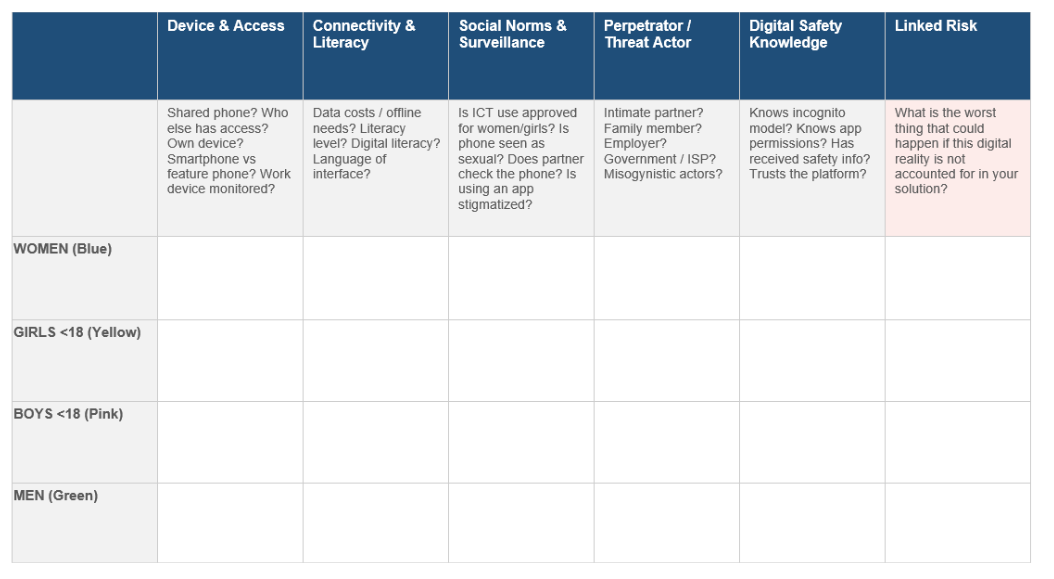
Workshop prepared by Caroline Masboungi, UNICEF, Meghan O’Connor, UNICEF and Judy Karioko, IREX.
The workshop followed a “learn, apply, review” arc. It opened by grounding participants in the lived digital realities of their users, introduced validated frameworks, then dedicated most of the time to a hands-on practical session where participants audit their own solutions against real-world scenarios. The session closed with peer review to surface blind spots.
Click to download:
This workshop was led by Kristian Wengen, Tinkr.
The workshop equipped participants with practical guidance on navigating procurement processes to build effective, equitable, and scalable partnerships. Using a gamified, hands-on approach, participants simulated real-world procurement scenarios, identified common challenges and bottlenecks and explored the strategies for creating win-win collaborations between innovators, donors, and implementing partners.
Click here to download the HIP Innovation-Friendly Procurement Guide.
Click here to download the Innovation-Friendly Procurement game cards.
Click on the links below to download the presentations to learn more about real world solutions from the frontlines of innovation from the HIP portfolio.
- ADRA and Response Innovation Lab: Financial Innovation and Resource Mobilization in Somalia
- IOM: Scaling E-waste and Energy Access Circular Models
- UNICEF: LAAHA – A digital safe space for women and girls
- Save the Children/ Kumwe Hub - Bridging the Digital Divide
- WFP: SOLAR: Solarizing Livelihoods Activities with Refugees
The cross pollination workshops were structured, hands-on working session designed to explore how organisations can collaborate more effectively in delivering and scaling innovation. Participants worked in two parallel breakout groups:
- UN Agencies Track, hosted by Marc Kaeraa (UNICEF) and José Alcocer (WFP)
- NGO Track, hosted by Linn Tomasdotter (Tinkr) and Kristian Wengen (Tinkr)
Click to download the tool and report from the NGO track, and here to download the use cases from the UN track.
Workshop led by Michael Ngigi, Catherine Wanja and Stephen Nzuki, ThinkPlace Africa.
This interactive workshop focused on designing innovations that are deeply responsive to the needs, contexts, and lived realities of their diverse intended users. The workshop also emphasized how to design innovations that are embedded within and supported by local systems. The facilitators guided participants in identifying pathways for institutionalization, local ownership, and long-term stewardship by local actors. Through case examples, guided exercises, and peer exchange, participantsexamined how to balance user needs with system realities, ensuring that innovations are both relevant to communities and sustainable within local governance, service delivery and market ecosystems.
Click here to download the workshop materials.
The Learning Labs was a structured working session structured in breakout groups designed to:
- Surface patterns across contexts
- Stress-test assumptions
- Identify bottlenecks and evidence gaps
- Translate insight into concrete next steps
Click here to download the Learning Lab canvas.
The Circles of failure were facilitated thematic discussions on project challenges and learnings. The groups analyzed failures across thematic areas on where and why innovations stall. These insights helped identify not just what went wrong, but where future efforts need to focus to enable scale and impact.
Click here to download the Circles of failure canvas.
Click here to download one-pagers about the HIP portfolio projects. These posters were displayed during the HIPpening and viewed by innovators, funders, investors and partners.