Kits that Fit: customized humanitarian kits for effective aid
 © UNICEF
What is the challenge
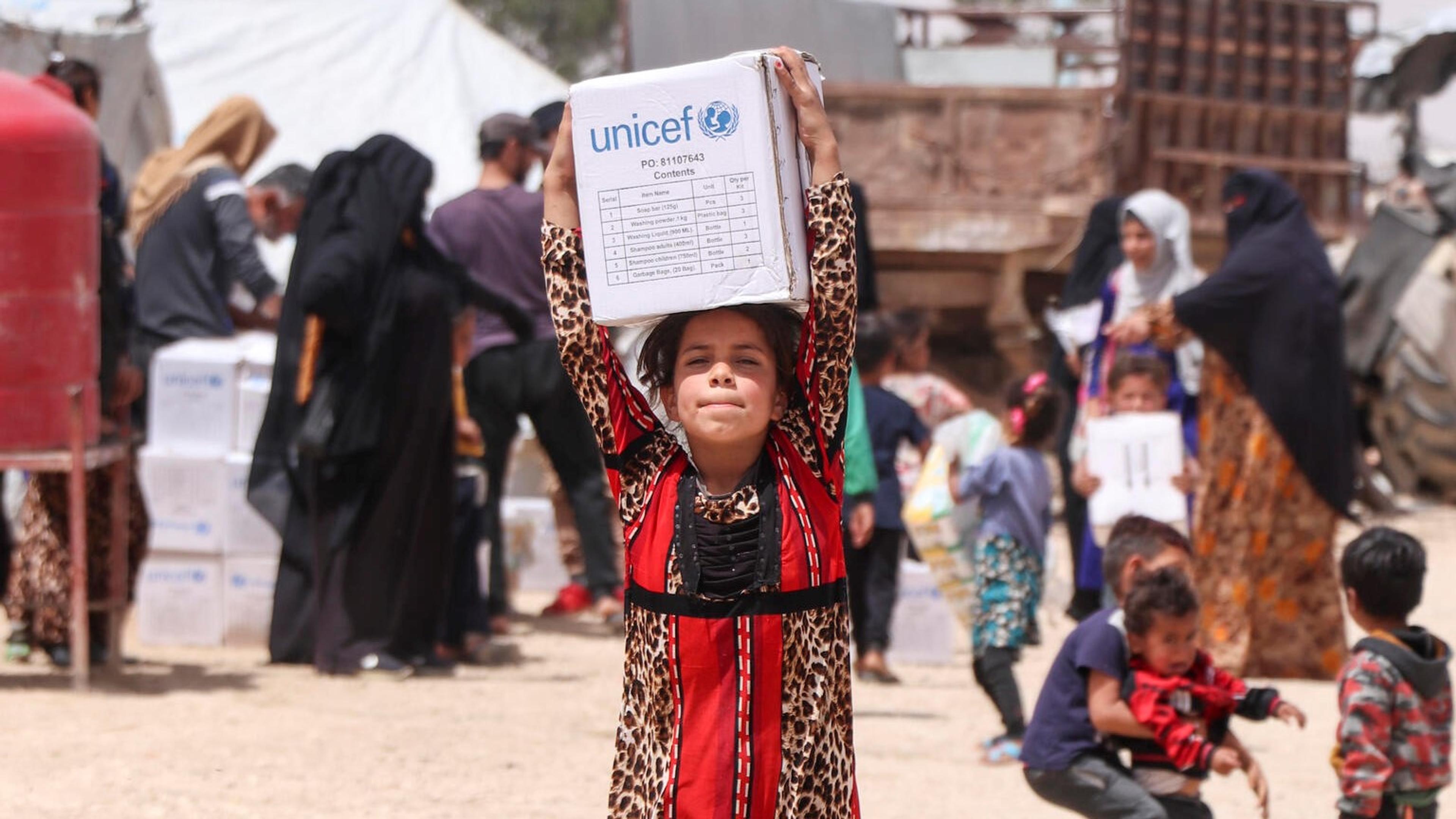
In today’s humanitarian response, emergency kits are often standardized, globally sourced, and designed to function across diverse crisis contexts. While this allows for rapid distribution, it can result in a mismatch between what communities receive and what they truly need. Household size, cultural practices, climate conditions, and gender-specific requirements vary widely, yet kits are frequently delivered without sufficient adaptation to these differences.
The absence of effective feedback mechanisms further intensifies this gap. Without structured ways for people to share their experiences and priorities, humanitarian actors risk providing assistance that falls short of expectations and lived realities.
In 2025, UNICEF estimates that 213 million children require humanitarian assistance worldwide. As crises grow in scale and intensity, humanitarian systems are stretched. The core challenge is therefore to deliver emergency supplies that are aligned with the specific needs of vulnerable groups – while ensuring dignity, accountability, and meaningful community voice.
What is innovative about the project
First granted support through HIP’s Innovation Lab in 2022, Kits that Fit embeds community voice directly into humanitarian supply systems. Instead of distributing standardized kits, the project establishes a two-way feedback mechanism that gathers anonymized input from people receiving emergency items and uses it to continuously adapt kit contents based on actual needs.
The approach prioritizes locally assembled and locally sourced kits, engaging suppliers through market dialogue and co-creation. This strengthens cultural relevance, reduces reliance on global supply chains, and supports local economies.
Private sector partners are embedded at the core of the model. Through partnerships that support AI-enabled feedback analysis and digital e-voucher platforms, the project connects community data directly to production and supply decisions. This helps bridge the gap between supply and demand and enables more responsive, data-driven humanitarian delivery.
In its scaling phase, the project also works to institutionalize shared feedback systems across UN agencies and integrate customization into preparedness efforts.
By combining feedback loops, local procurement, private sector collaboration, and digital innovation, Kits that Fit makes emergency aid more responsive, accountable, and aligned with the communities it serves.
What are the expected outcomes
As a scaling project, Kits that Fit aims to expand its feedback-driven customization model across additional countries and programmatic areas, reaching millions more children and families affected by crises.
During the project period, the initiative will:
- Scale the approach to at least eight new countries, piloting or expanding customized kits in new humanitarian contexts.
- Strengthen inter-agency collaboration by building joint feedback mechanisms and shared data platforms across UN partners.
- Integrate the model into preparedness efforts by pre-positioning kits that are informed by community input before disasters strike.
- Link customization and feedback systems to UNICEF’s broader UNICARE platform to institutionalize Accountability to Affected Populations (AAP).
The expected outcome is a more responsive, accountable, and effective humanitarian supply system – where emergency kits are continuously refined based on community voice, local markets are engaged, waste is reduced, and assistance better reflects the realities of the people it is meant to serve.
Who are the project partners
Kits that Fit is deployed by UNICEF’s Office of Innovation and Office of Emergency Programmes (EMOPS), working together to embed customization and accountability into humanitarian supply systems.
The project is implemented in partnership with UNICEF Country Offices, including Kenya and the State of Palestine, where the approach has been piloted and refined.
Various partners support the deployment of Kits that Fit: Mezzanine links with the rollout of digital e-voucher systems, enabling affected families to purchase essential items directly from local vendors. STEM Impact Centre Kenya offers technical support for rapid prototyping and digital system development, while Techno Relief Services Ltd engages in locally customized humanitarian kit components.
The Humanitarian Logistics Association has supported knowledge sharing and sector engagement, helping to promote wider adoption of the approach.